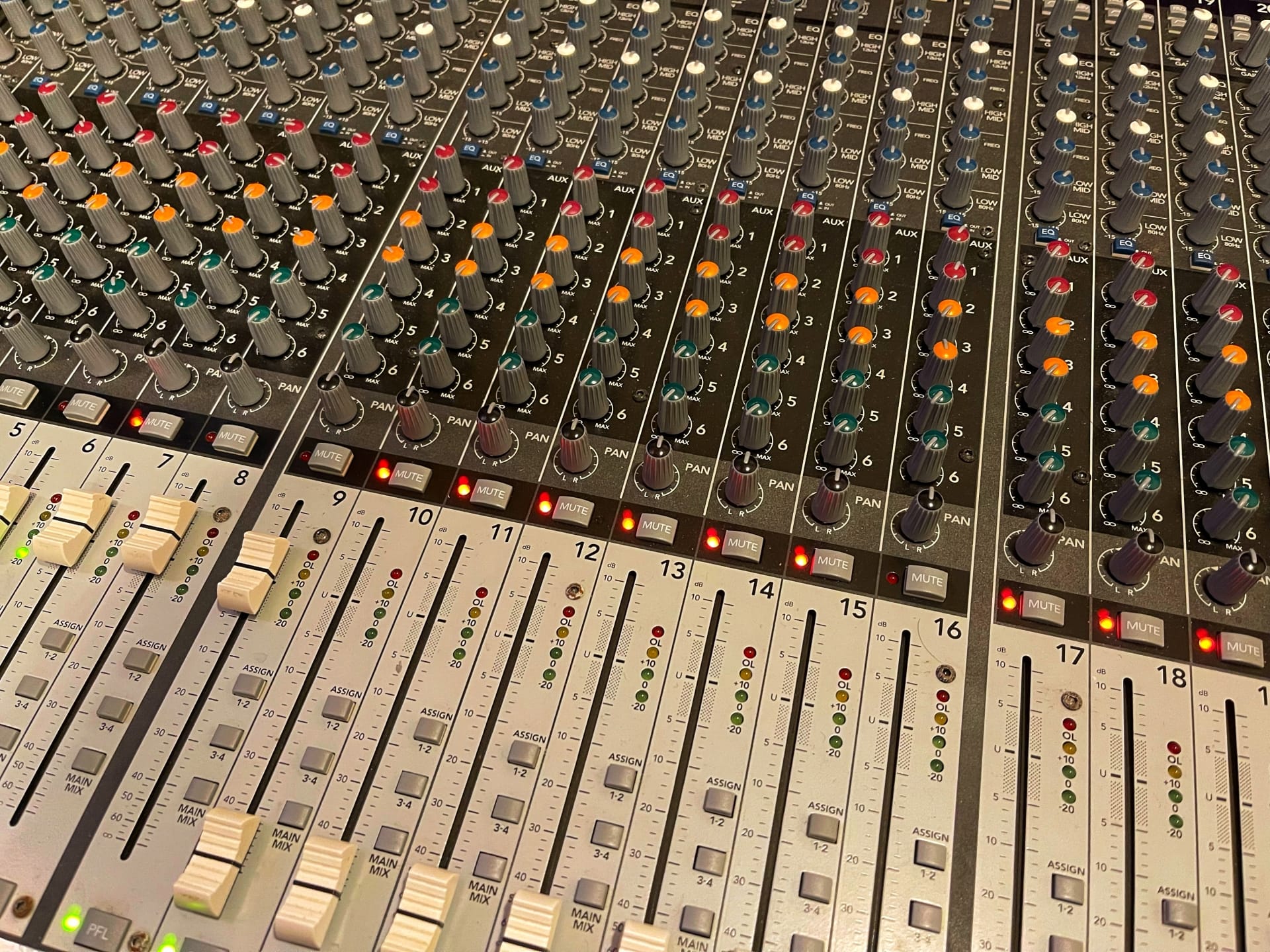
If you want to record and distribute your music, you can’t skip mixing process. But if you’ve never recorded before, you probably don’t know much about mixing, right? So, I’ll explain mixing for people with no musical knowledge.
What is the mixing?
When recording many vocals and instruments, the total number of tracks can reach tens or even hundreds. Generally, drums alone can amount to over 20 tracks. This number depends on the band and the scale of the recording, but it’s rare to find it limited to just 10 or 20 tracks.
If I were to explain mixing in one sentence, it would be the process of organizing the sound. For example, imagine a full orchestra. Dozens of musicians sit in positions that produce the best balance. But what would happen if they all gathered in the same place to play? The sound balance would be mess, and even the most skilled orchestra would sound very unpleasant to listen to.
Without mixing, the music becomes tiring to listen to
Pop and rock music recorded without mixing is like an orchestra playing together in the same place. It lacks the necessary spatial breadth, depth, and optimal resonance, resulting in a sound that’s tiring to listen to.
An orchestra band can only produce a pleasing sound by arranging the first violins, second violins, violas, cellos, double basses, brass instruments, and woodwinds in a balanced manner.
The same applies to pop and rock music. Drums, bass guitar, guitar, piano, vocals, etc., need to be balanced through mixing to highlight the best qualities of each sound. Furthermore, even with just the drums, the kick drum, snare, hi-hat, high tom, mid-tom, floor tom, cymbals, and ride cymbal need to be balanced. Even more, the snare drum alone typically requires three or more microphones.
Mixing primarily involves adjusting volume, left/right positioning, and tone quality. Pitch correction for vocals, harmonic enhancement, and echo are also set during the mixing process.
My go-to DAW is Logic Pro
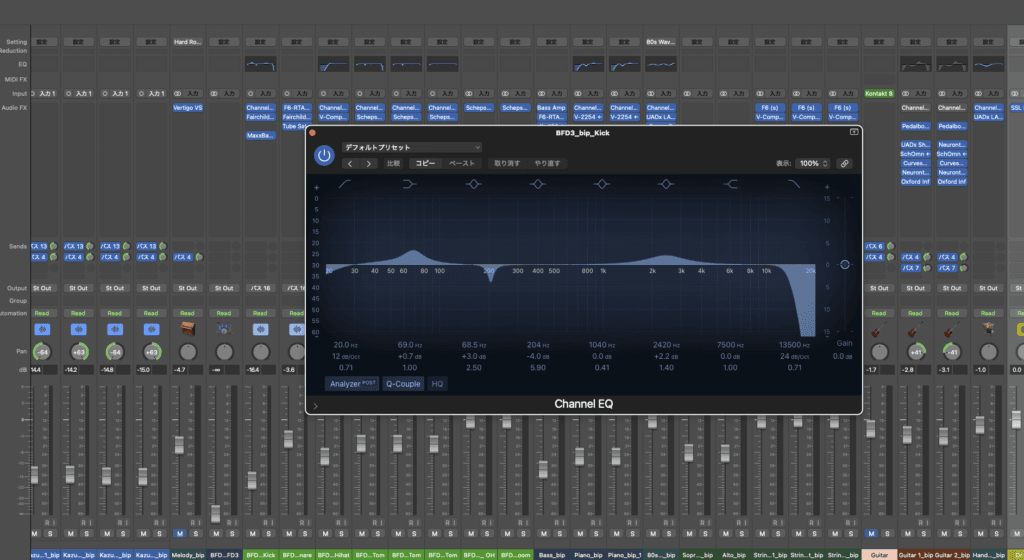
My go-to DAW (Digital Audio Workstation) is Logic Pro. While I previously used Pro Tools and Cubase, I ultimately settled on Logic. The image above shows the Logic Pro mixer screen with an EQ plugin open.
You can see dozens of faders in the image. There are dozens more faders on the right side of this screen. This means that a large number of instruments and vocal parts were recorded within a single song.
I move each of these faders in real time and record the movements using the automation function. For example, for a lead vocal track, I might set the volume to be a little lower during the verse and increase the volume during the chorus.
Then I use EQ to remove any muddiness from the sound and adjust it so that the vocals sound clear. These tasks are time-consuming and require effort.
Mixing requires countless plugins.
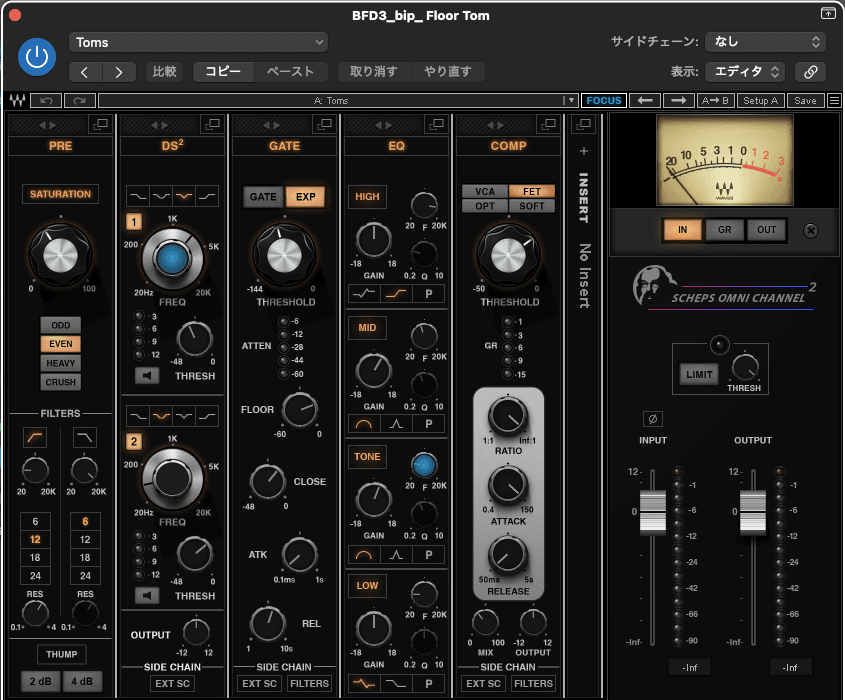
The image above shows a plugin called a channel strip. Both computer mixers and physical mixers have channel strips, and I carefully adjust the sound quality after thoroughly understanding the function of each knob. If I don’t understand the functions correctly at this stage, the sound quality will be a mess.
And there are hundreds of these plugins. I have countless plugins installed in my Logic Pro. By understanding the properties of each plugin, producers can choose the right plugin for each voice or instrument.
At WE WILL REC YOU’s music production service, I, of course, handle the mixing. It’s a time-consuming and difficult task, but I love it. The sound immediately after recording is muddy and very weak. However, mixing makes the sound richer and more brilliant.
Even if your vocals are slightly off-key or rhythmically, this can be corrected to some extent during the mixing process. Most professional singers today use pitch correction. So, even if you’re a singer with passion for singing but still developing your vocal skills, don’t worry. I can correct those issues through mixing.
If I were to write about mixing in detail, it would take several thick books because it’s such a complex subject. Therefore, I can’t explain everything about mixing here, but I would be happy if beginners could at least get a general understanding of the mixing process.