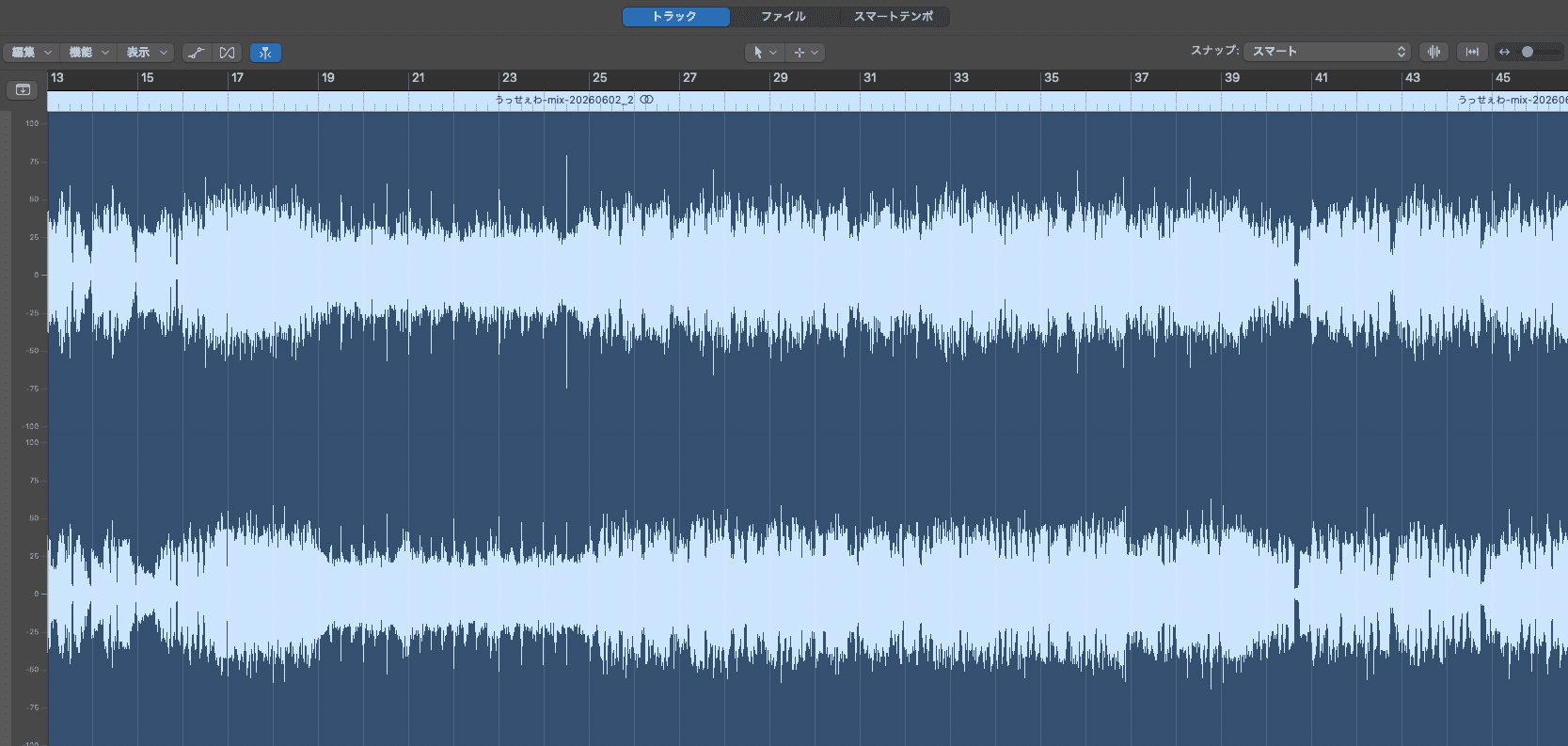
Mixing is the process of combining dozens or hundreds of recorded tracks into two channels, left and right. Mastering is the final step in adjusting the sound quality and volume of the stereo audio source that has been combined into two channels.
Recent trends in mastering
In a studio, they have recording engineers, mixing engineers, and mastering engineers, each specializing in their respective fields. But, with the advancements in DAWs in recent years, it’s becoming increasingly common for producers like myself to handle all aspects of the work alone in our home studios.
Furthermore, 20-30 years ago, plugins hadn’t evolved as much, and achieving professional-quality mixing and mastering required a lot of expensive hardware, even in a home studio. I myself used to own a lot of hardware.
But, in recent years, plugins have evolved remarkably, and the difference in sound quality compared to using hardware has almost disappeared. Even award-winning songs sometimes use very little hardware, with mixing and mastering done almost entirely with plugins.
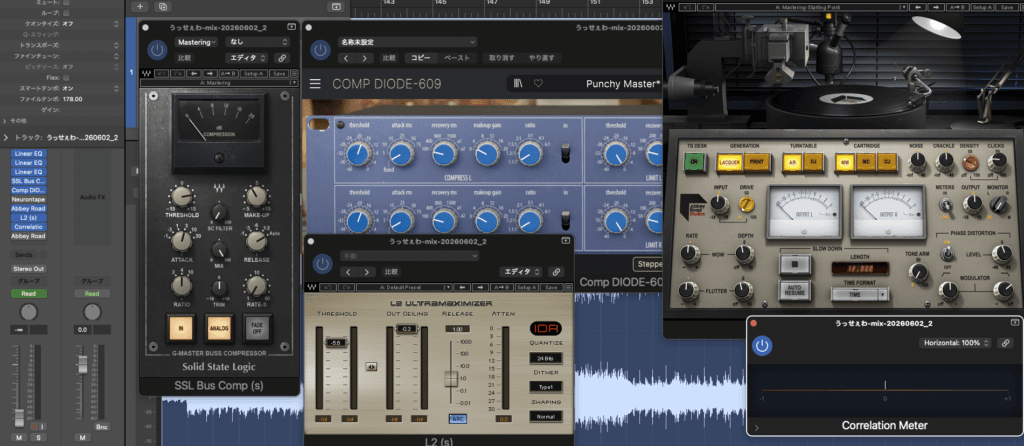
The image below shows some of the plugins I frequently use for mastering.
The era of prioritizing loudness in mastering is over.
One of the challenges in mastering is that the recommended LUFS varies depending on the platform. LUFS is an international standard unit for representing the loudness of a song. However, platforms like Spotify and Apple Music use loudness normalization, so when you upload a song, it’s automatically adjusted to the appropriate LUFS for each platform.
About ten years ago, higher loudness was considered better, but this idea has been re-evaluated in recent years. The priority now is to increase loudness while preserving the dynamics of the song. While higher loudness makes the sound more impactful to the ears and body, it also means losing the inherent dynamics—the nuances and inflections—of the music.
While loudness may still be prioritized in some genres like dance music and EDM, in recent years, mastering techniques that sacrifice dynamics have become less common in genres like rock and pop.
The warmth of sound adds during mastering
In mastering, sonic warmth is also a crucial element. For example, many music fans prefer listening to music on vinyl records because of the warmth they perceive. When producers like us work on the final stage of mastering, we strive to recreate that same warmth as vinyl records.
There are many plugins that can reproduce the warm sound quality of vinyl records. I myself own five or six such plugins. Of course, it’s impossible to perfectly replicate the sound quality of a physical record 100%, but using plugins can eliminate harshness and create a very warm sound that doesn’t hurt your ears even after listening for extended periods.
Incidentally, it’s also possible to reproduce the same noise as vinyl records. I rarely use this function, but many engineers seem to add a small amount of this noise during the mastering process to recreate a retro feel.
Mastering requires knowledge and experience
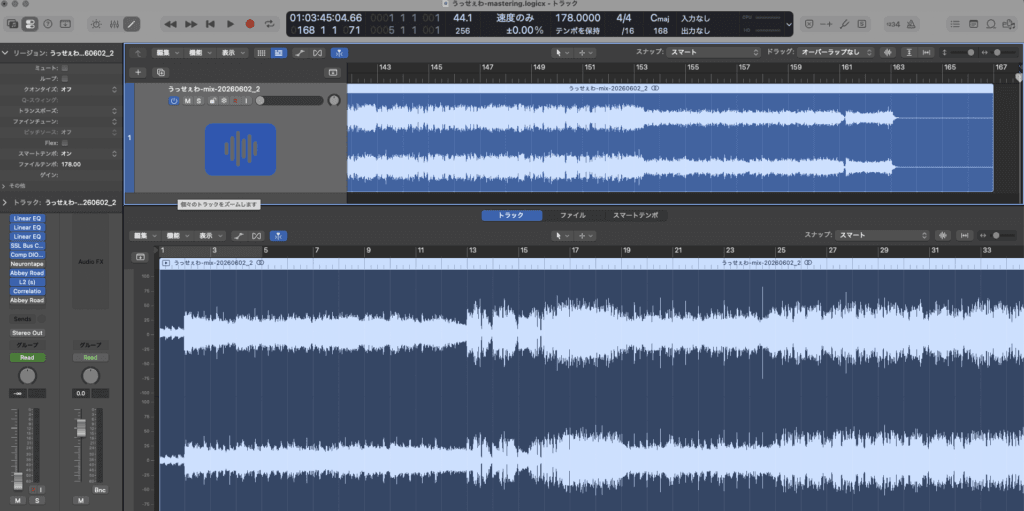
Mastering is the final stage in audio production, where the two-channel audio combined through mixing is refined to produce a warm and pleasant sound. When distributing music on platforms like Spotify, audio files that haven’t undergone mixing and mastering will not pass the distribution review process.
While AI can be used to achieve a certain level of sound quality during mastering, using AI mastering will likely result in AI labels appearing on your music on platforms like Spotify in the near future. Research by major platforms has shown that most listeners will skip tracks with AI labels.
Mixing and mastering can be done by anyone with a computer and a DAW like Logic Pro. However, achieving high-quality sound requires knowledge and experience. That’s why many singers, or aspiring singers, entrust these tasks to producers like me.
I do not use AI in my production process. Therefore, if you commission me to produce your music, AI labels will not appear on your tracks.